Commuting from Westlake Village to Los Angeles: Times & Transit

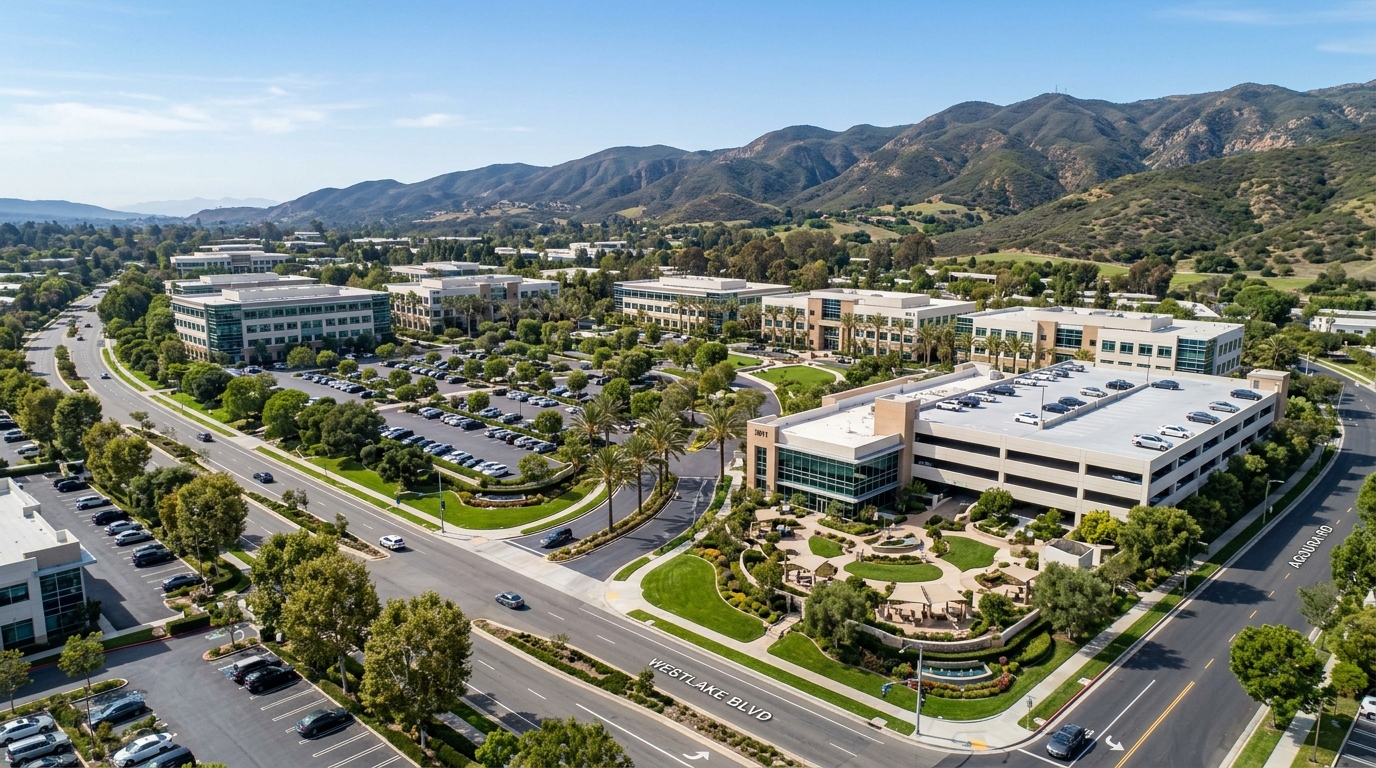
Westlake Village · Community Photo
A practical guide for the Westlake Village commute, delivering real‑world drive times of roughly 57 minutes to an hour and a half over the 37‑41 mile US‑101 corridor, plus details on express LADOT Bus 422/423 services, Metrolink Ventura County rail connections, and daily navigation strategies for reaching Downtown LA, Century City, and the Westside. Whether you’re a new driver or a seasoned commuter, this overview equips you to plan the fastest, most reliable route each day.
Geographic Overview
Westlake Village sits in the scenic Conejo Valley on the Los Angeles‑Ventura county line, offering lakefront views, elite schools, and a quiet suburban atmosphere.
The Westlake Village commute to Downtown Los Angeles stretches roughly 38 to 42 miles along the US‑101 Ventura Freeway, a corridor that defines the core commute distance for many professionals.
Because Los Angeles traffic can be heavy during peak hours, residents often time their trips to avoid the rush, taking advantage of the relatively direct freeway link while still enjoying a tranquil home base.
Why Professionals Choose Westlake Village
Suburban tranquility away from the bustle of the city.
Lakefront views and access to open‑space recreation.
Highly rated schools that attract families.
Proximity to major employment hubs across Southern California, making the daily Westlake Village commute practical.
By balancing a peaceful living environment with a manageable commute distance, Westlake Village remains a popular choice for those who work in the dynamic centers of Los Angeles while preferring the comforts of a smaller community.
Commute Time, Traffic Conditions & Traffic Congestion to LA
Destination | Primary Corridors | Typical Commute |
|---|---|---|
Downtown Los Angeles | US‑101 S; LADOT Commuter Express Bus 422 | Approximately 37 mi with a commute time of about 57 minutes, subject to Los Angeles traffic and varying traffic conditions |
🚗 Westlake Village ↔ Los Angeles Commute Calculator
Check your commute time against expected traffic congestion and estimate monthly fuel costs to assess your commute feasibility.
⚠️ Figures are based on publicly reported averages (sources: Uber route data, Rome2Rio). Actual commute times vary with real-time traffic, road incidents, weather, and individual driving conditions. The monthly fuel estimate assumes 5 round-trip commutes per week over 4 weeks and does not include tolls, parking, or vehicle wear. This tool is for planning purposes only.
Public Transit: LADOT Commuter Express & LA Metro Bus 161
LADOT Commuter Express (Routes 422 & 423)
The LADOT Commuter Express provides weekday, peak‑hour service between the Conejo Valley (including Westlake Village) and Downtown Los Los Angeles. Both routes run Monday through Friday and make stops along the freeway corridor before arriving at Broadway and Temple in the downtown core.
Operates in the mornings and afternoons, matching typical office‑hour schedules.
Coach amenities include climate‑controlled interiors, reclining seats, reading lights, and onboard Wi‑Fi, allowing riders to work or relax.
Pick‑up points are located near the intersection of E 101 Highway & Alvarado; the bus proceeds directly onto the freeway‑express lanes.
Route 422 details and Route 423 details are provided by LADOT.
Metrolink Ventura County Line
The regional rail option runs on the Ventura County Line, with the nearest stations at Moorpark and Chatsworth. From either station, trains travel straight into Los Angeles Union Station, where passengers can connect to the broader LA Metro rail network.
Service is scheduled throughout the day, offering flexibility beyond peak‑only bus runs.
Onboard conveniences include restrooms, work tables, and Wi‑Fi on many trains.
Transfers at Union Station give access to Metro rail lines, light rail, and bus rapid transit.
Metrolink schedule provides current departure times.
LA Metro Bus 161
The LA Metro Bus 161 connects Westlake Village via Agoura Road and Thousand Oaks Boulevard to the West San Fernando Valley, stopping in Canoga Park and Warner Center. Riders can then transfer to the Metro G Line or other bus routes to reach downtown destinations.
Operates daily with frequent service during peak periods.
The bus runs on a dedicated corridor, reducing travel time compared with surface streets.
Stops are equipped with shelters and real‑time arrival displays.
Why choose public transit?
Using these public transit options lets commuters reclaim the hours normally spent in traffic. Whether reading, answering emails, or simply relaxing, passengers arrive at work refreshed and stress‑free.
Pro‑Tip for Conejo Valley Commuters: Maximizing Transit Benefits
Explore how public transit options like LADOT Commuter Express 422 & 423, Metro Bus 161, and Metrolink can improve commute feasibility.
Canyon Corridors: Traffic Conditions & Commute Feasibility
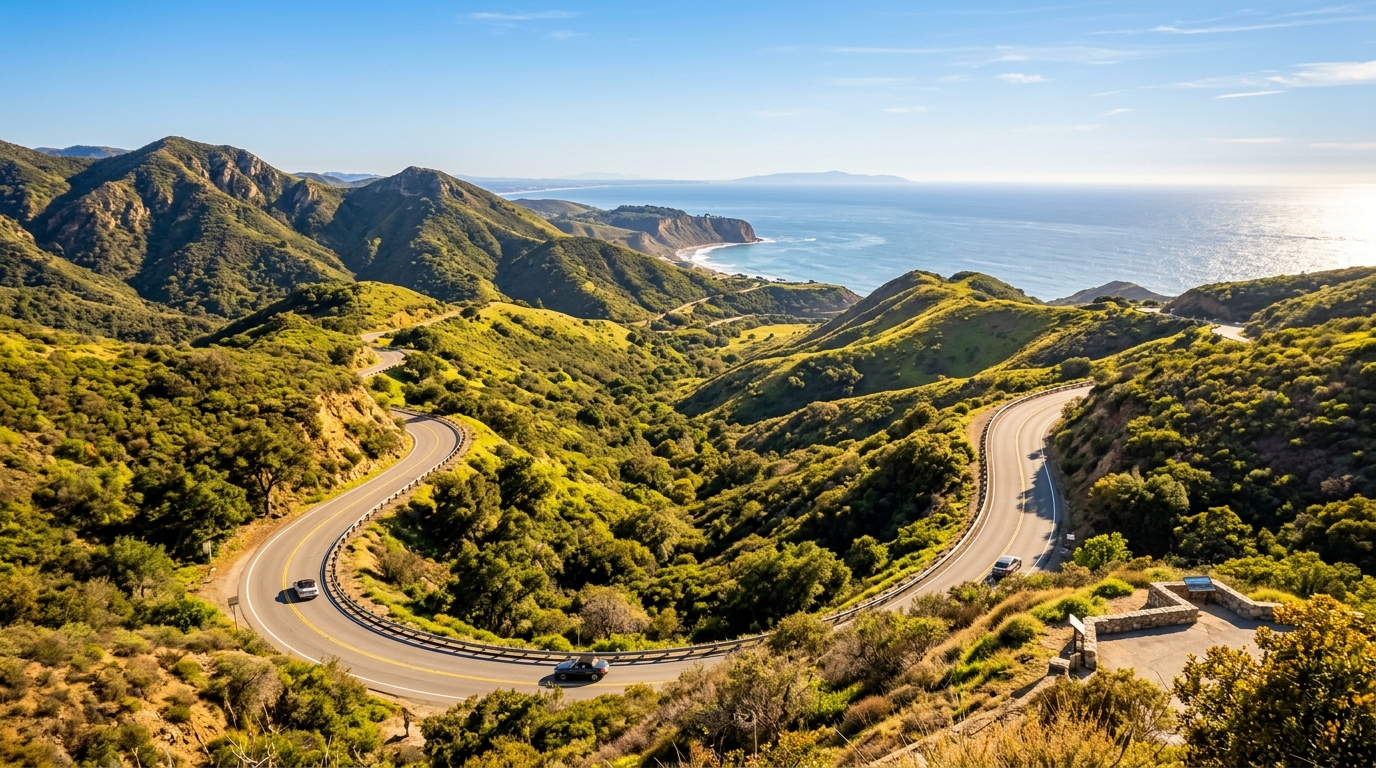
Kanan Dume Road & Pacific Coast Highway (CA‑1)
The combination of Kanan Dume Road and the Pacific Coast Highway offers a scenic bypass for drivers heading toward Santa Monica, Venice, and other coastal hubs. The route threads through the Santa Monica Mountains, dropping toward the shoreline and merging onto CA‑1, which runs parallel to the beach. Because it avoids the 101/405 interchange, many navigation apps recommend it when downtown traffic conditions become severe.
Malibu Canyon Road / Las Virgenes Road
Malibu Canyon Road provides a direct descent from the Calabasas‑Agoura Hills area into Malibu, linking with Las Virgenes Road to re‑enter the Pacific Coast Highway toward Santa Monica. This corridor is popular among commuters who need to reach Pepperdine University or the Malibu tech corridor without sitting in the freeway bottleneck. The winding sections can add minutes, but they often improve overall commute feasibility during peak rush hour.
Topanga Canyon Boulevard (CA‑27)
Topanga Canyon Boulevard climbs from Woodland Hills, traverses the Topanga Canyon, and descends into Pacific Palisades before joining the coastal route toward Santa Monica. The road serves as a secondary option for drivers traveling from the San Fernando Valley who want to avoid the 101‑405 merge. When the freeway gridlocks, GPS algorithms sometimes steer traffic onto this canyon, highlighting its role in balancing regional flow
All three corridors are two‑lane, winding roads that demand careful attention, especially in wet weather when rockfall and reduced traction are possible. Drivers should maintain slower speeds behind commercial trucks and stay alert for sudden turn‑outs. For new drivers commuting from Westlake Village, practicing on these routes during off‑peak hours can build confidence before relying on them during congested periods.
Four Ways to Commute From
Westlake Village to Los Angeles
A practical breakdown of every route — freeway, canyon, bus, and rail — so you can choose the commute that fits your life.
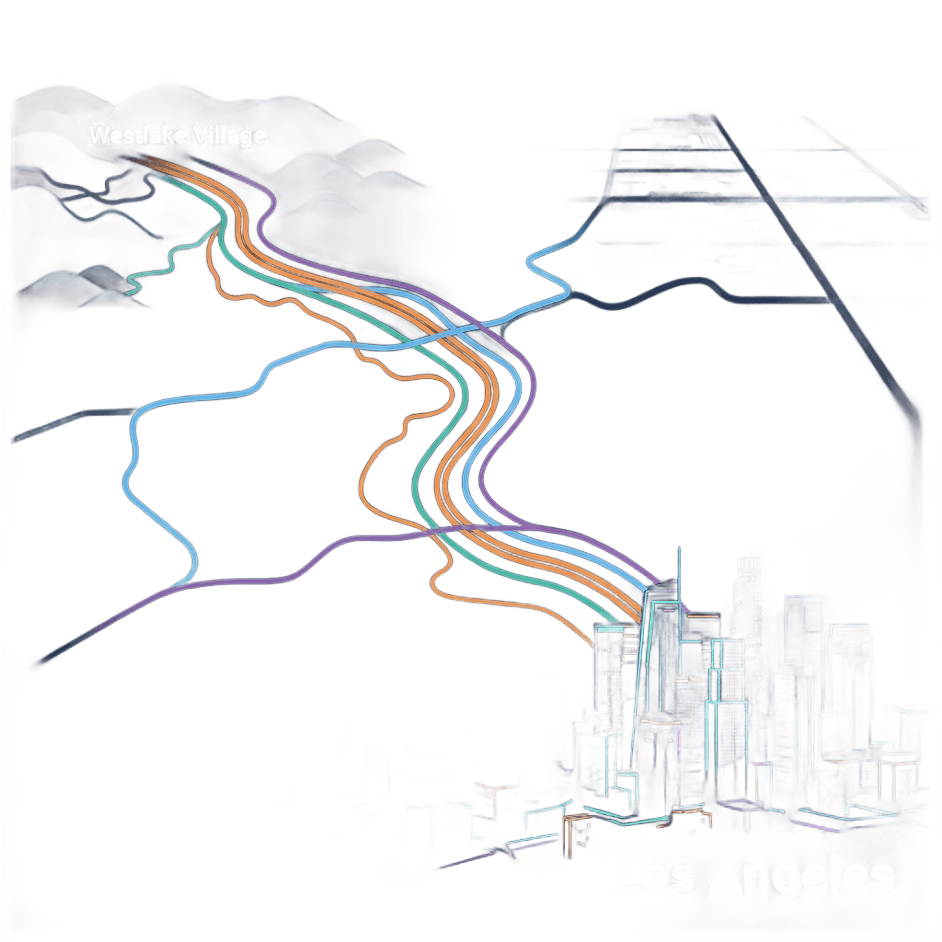
Your Route Options
US‑101 Direct
Canyon Passes & PCH
LADOT Commuter Express
Metrolink Ventura County Line
Quick-Reference Comparison
Distance and drive-time figures are for US-101 (verified data). Dashes (—) indicate routes where no comparable distance or timed data has been verified.
All figures shown are drawn directly from verified sources. Route 1 (US-101) data sourced from Rome2rio and Uber route data. Canyon, Commuter Express, and Metrolink travel-time figures are not available in verified research and are therefore omitted. Always check live traffic conditions before departure.
Worst traffic best way to commute in LA, commute feasibility
Worst Traffic Hours
What hours are the worst for LA traffic? Morning peak congestion on US‑101 Southbound runs from 7:00 AM to 9:00 AM, while the evening return surge on US‑101 Northbound (and I‑405 North through the Sepulveda Pass) is heaviest between 4:30 PM and 6:30 PM 【Finding 14】.
During these windows, peak morning drive times from Westlake Village to Downtown LA typically range from 60 to 90+ minutes, compared with off‑peak trips of 45 to 55 minutes 【Finding 6】.
Best Public Transit Options
What is the best way to commute in LA? Two fast, direct options serve the Conejo Valley corridor:
LADOT Commuter Express routes 422 and 423 provide peak‑hour express bus service from Westlake Village and Thousand Oaks straight to Downtown Los Angeles, stopping along Figueroa Street and Grand Avenue 【Finding 7】【Finding 11】. LADOT Commuter Express
Metrolink’s Ventura County Line runs from Moorpark or Chatsworth stations to Union Station in Downtown LA, offering a rail alternative for commuters 【Finding 13】. Metrolink Ventura County Line
These services connect to the wider LA Metro network, enabling transfers to rapid‑bus (G Line) and rail lines for a seamless door‑to‑door commute.
Hybrid Schedule Viability
Hybrid work models—splitting 2 to 3 days in the Los Angeles office with the remainder remote from Westlake Village—have become common among Conejo Valley residents 【Finding 16】. This arrangement reduces weekly driving mileage, lessens exposure to peak‑hour congestion, and preserves the flexibility that many professionals value.
Tips for New Drivers
For those new to commuting, a few practical habits improve safety and reliability:
Check Caltrans QuickMap for real‑time traffic conditions before leaving the house 【Finding 6】.
Allow extra time during morning peaks, especially if traveling on US‑101 southbound.
Consider using the HOV carpool lane when traveling with a passenger, as it requires 2 or more occupants to bypass traffic (a standard regional rule).
Stay alert on winding sections of the 101 corridor, especially in inclement weather.
Overall Commute Feasibility
When evaluating commute feasibility, weigh the trade‑offs between driving during peak periods and the reliability of express bus or rail options. For many, a mixed approach—driving off‑peak a few days and riding LADOT or Metrolink on others—delivers the best balance of time, cost, and comfort.